Things we know Jesus wasn’t

He wasn’t born December 25th. The shepherds and flocks would not have been out in the fields overnight.

He wasn’t a Christian. Christianity was the invention of St. Paul in the decades after Jesus’ execution. Jesus was a rabbi, and outspokenly strict on upholding Jewish religious laws.

Did Jesus look European, or African? Who knows...

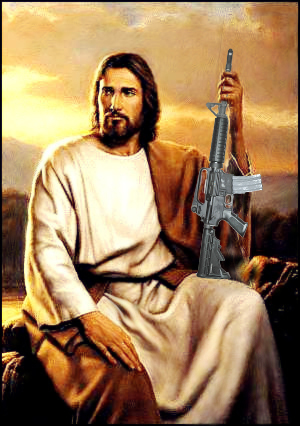
He wasn’t a pacificist. He said “I did not come to bring peace, but a sword” and, shortly before the Romans caught him, “If you don’t have a sword, sell your cloak and buy one.” He attempted to take over the Temple in Jerusalem and he was crucified by the Romans (the punishment for armed insurrection) between two (other) Zealots.

He wasn’t born in 1 BC or 1 AD (or the legendary “Year Dot”). He was born a couple of years before Herod the Great died in 4 BC.

He wasn’t born of a virgin, if by “virgin” you mean “girl who had never had sex”. Why not? Because that doesn’t happen. Get real. The word should be more correctly translated as “young girl of marriageable age”.

As for the rest, you can read into it what you like.

Did he look like a European? Maybe – depending on who his biological father was. The Romans and Greeks were all over Palestine, and the Roman troops included Germans and Gauls. We don’t know. He might equally have looked African.

Was he gay? Maybe – he doesn’t appear to have been married, and there are various ambiguous statements and situations in the Gospels suggesting he was gay. He might have been gay, straight, bi, asexual…

What happened to his corpse? We don’t know for sure. Someone took it when it had been entombed for 36 hours (Friday evening to Sunday morning). Jewish rumor at the time was that his followers stole it.

Lots of room there to create stories about him! Have fun – I do.
Jesus’ Message, 3: Eternal Life

Jesus said that the two greatest commandments from God were the Shema, and to treat your fellow Jews well. When a rich young man told him (Matthew 19: 20) that he had followed these – and the Ten Commandments, and in fact all of God’s commandments – and asked what he had to do to gain eternal life, Jesus did not, repeat NOT, say anything like “Accept me as your Lord.”

Jesus said “Sell everything, give it to the poor, and follow me.”

The Pope on his thrones in his palaces thinks he is poor.

In ‘The Gospel According to the Romans’ the words would carry a different nuance: “Sell everything, give it to the Zealots, and join the insurrection against the Roman occupation.”

In any case, the young man went away sadly, because he was rich. That was when Jesus made his remark about it being easier for a camel to go through the eye of a needle, than for a rich man to get into Heaven.

And no matter which interpretation of Jesus’ words is correct, it is hard to imagine either the Pope or any televangelist being allowed in at the pearly gates.

Jesus and the dangers of being illegitimate

The issue of Jesus’ father was problematic for his attempt to be recognized as Messiah – just as it was for his parents before he was born.

Mary is described by a word which can mean either ‘virgin’ or ‘girl of marriageable age’ – but strongly carries a meaning of ‘not married’.

The Gospels state that Joseph discovered that Mary was already pregnant when he married her, and, being a just man, decided to divorce her quietly rather than make a public example of her. But, after dreams changed his mind, he chose another reasonable solution: go to a different town (Bethlehem, where his own family was from) for a few months, let her have the baby where no one knew when they had married, and then return home (Nazareth) where no one knew when the baby had been born. That way the fiction of Jesus’ legitimacy could be maintained.

Stoning people to death for sexual misconduct is an ongoing tradition of monotheism

It was important for a child to have been conceived within marriage. Even if the parents subsequently married, if the child was conceived outside marriage it was considered a bastard. The laws in Deuteronomy are clear and harsh:

  • married woman has sex with another man, both stoned to death
  • betrothed virgin raped in a town, both stoned to death (she, for not having called for help)
  • betrothed virgin raped in the countryside, only the man stoned to death
  • unbetrothed virgin raped, the rapist has to pay the victim’s father fifty silver shekels and marry her.

So, depending on quite how young Mary got pregnant, her life was in danger. Assume Joseph loved her – he needed to be creative to protect her.

The problems of illegitimacy came up again when Jesus was making his play for Messiah and King. As Deuteronomy 23:2 states: “A bastard shall not enter into the congregation of the LORD; even to his tenth generation shall he not enter into the congregation of the LORD.”

Not surprising, then, that his followers grasped at whatever unlikely explanations they could think of, in order to explain away the embarrassing rumors!

Jesus’ Message, 1: “Hear, O Israel -“

Jews traditionally identify 613 commandments from God in the Torah, from the initial commands to Adam and Eve to “Be fruitful, and multiply, and replenish the earth, and subdue it”, through “Thou shalt not kill”, to the requirement that the congregation stone a blasphemer to death. No wonder that it is claimed that no one has ever been able to keep all 613 commandments!

When Jesus was asked which of the commandments was the most important he said “The first of all the commandments is, Hear, O Israel; The Lord our God is one Lord: And thou shalt love the Lord thy God with all thy heart, and with all thy soul, and with all thy mind, and with all thy strength: this is the first commandment. And the second is like, namely this, Thou shalt love thy neighbour as thyself. There is none other commandment greater than these.”

Because these two sound so much more forceful and defined than the Ten Commandments, people brought up in the Christian tradition assume they are Jesus’ original developments to monotheism.

Yet for the first one, Jesus is merely affirming his Jewishness. He is quoting the fundamental prayer of Judaism:

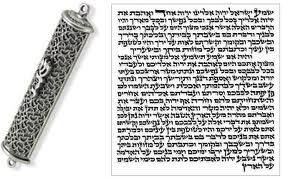
“Hear, O Israel: The Lord our God is one Lord: And thou shalt love the Lord thy God with all thine heart, and with all thy soul, and with all thy might. And these words, which I command thee this day, shall be in thine heart: And thou shalt teach them diligently unto thy children, and shalt talk of them when thou sittest in thine house, and when thou walkest by the way, and when thou liest down, and when thou risest up. And thou shalt bind them for a sign upon thine hand, and they shall be as frontlets between thine eyes. And thou shalt write them upon the posts of thine house, and upon thy gates.”

A Mezuzah for holding the text of the Shema, Deuteronomy 6:4-9

For its opening words, this is known as the Shema Yisrael (or just the Shema). It is the most important prayer, recited twice daily by observant Jews, taught to children to recite before sleep, attempted as the last words of the dying.

When you enter the home of an observant Jew you will notice a small container, a couple of inches long, fixed to the door frame. This is a mezuzah, containing the Shema.

For Jesus, as for any observant Jew, it was the single most important commandment from God.

Judas – Iscariot, Sicariot

Let’s pull some pieces together from the Gospels:

The disciples were forbidden to carry money – but Judas kept the movement’s money. He had a special relationship with Jesus, and a special place in the movement.

Zealots, being egalitarian and recognizing only God as their Lord, called each other “Friend”. Judas is the only disciple addressed as “Friend” by Jesus.

Judas led the Romans to Jesus, but not necessarily of his own free will. He died violently immediately afterward. He was found hanged (Matthew) and with his belly split open and his guts spilled out (Acts). The Romans claimed it was suicide.

Judas is called “Iscariot” in the New Testament. That name is obscure in meaning, and there have been suggestions that he must have come from the town of Karioth. Unfortunately, there is no record of exactly such a town name. In ‘The Gospel According to the Romans’ I suggest that the name is a deliberate corruption of “Sicariot”, to disguise the name of this very important person in Jesus’ story. A sica is a curved knife, the weapon of choice of urban guerrillas. A “sicariot” is a “dagger man”.

Jewish Sica

“Sicariot” was the common derogatory term for a Zealot, the armed resistance against the Roman occupation of Israel. Other terms used by the Romans were “thief” and “robber”.

When Paul tried to spread his new religion into the Roman population at large, links between Jesus and the Zealots were problematic. Distortion and misdirection were necessary in a retelling of the story from which the Romans were largely omitted. Judas was too well-known to ignore; but at least his name and his role could be shifted, from Jesus’ friend the “Sicariot”, to Jesus’ betrayer the “Iscariot”.

Who were the Zealots?

The Zealots were the armed resistance to the Roman occupation of Israel, and caused uprisings throughout a 200 year period. They terrorized collaborators, assassinated leaders, robbed caravans and killed legionaries whenever they could, operating as urban and rural guerrillas with their trademark curved dagger, the sica. They were sicariots, dagger men.

Zealots - robbers, or freedom fighters?

The Romans called them sicariots, robbers, thieves and brigands. But they would hardly call them heroes, patriots and freedom fighters, would they?

Once a generation or so a Zealot leader would arise who would lead a full-scale revolt – capture a city, massacre gentiles, loot arms and treasure, and finally be crushed when the Romans sent in a couple of Legions.

In 6 CE when Jesus was about 12, Judas of Galilee captured Sepphoris (or Zippori), the capital of Galilee only four miles from Nazareth. The Romans defeated his ragtag forces and crucified 2,000 of them. (Jesus’ father Joseph is not heard of after that event.)

After Jesus led his unsuccessful uprising in the Temple at Jerusalem, he was caught and crucified between two “thieves”. Neither theft nor blasphemy was punished with crucifixion; only rebellion was. When the Romans labeled Jesus “King of the Jews” they were echoing his claim from his ride into Jerusalem on his donkey, and clarifying why they were crucifying him. The two “thieves” were also important enough to be crucified.

A fourth was arrested and released: Barabbas, identified as “a robber”. “Bar-abbas” is a strange name – it means “son of a father”, “son of his father”, or “Son of the Father”. He was a Zealot, anyway. In “The Gospel According to the Romans” I suggest a couple of different reasons for his release.

The Zealots were active for another 100 years, until the final destruction of Jerusalem in the Bar Kokhba Revolt.

Using current events for historical fiction

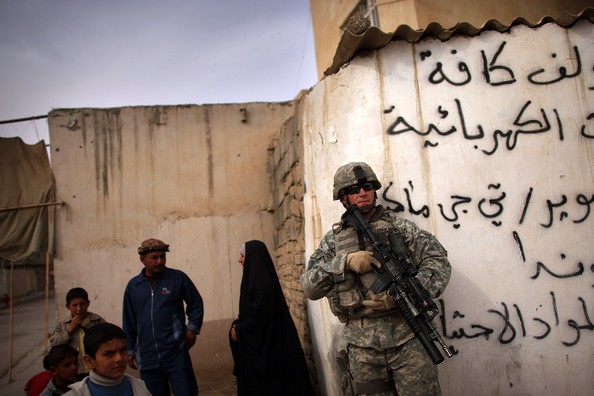
Current events are excellent for giving fresh insights into a pre-existing area of interest. I had long wanted to write a non-believer’s novel about Jesus, and it was the Western invasion and occupation of Iraq that triggered the idea of writing about Jesus from the point of view of the Romans occupying Palestine.

What would a local religious funamentalist preach, if his land was occupied by heavily armed Westerners who trampled on the religion and culture?

Six years later, THE GOSPEL ACCORDING TO THE ROMANS is in proof and should be out in a couple of weeks (CreateSpace and Amazon). If you’re interested in the different take, and the use of current events in historical fiction, the first chapter can be accessed from the top of this page.

Why a Menorah?

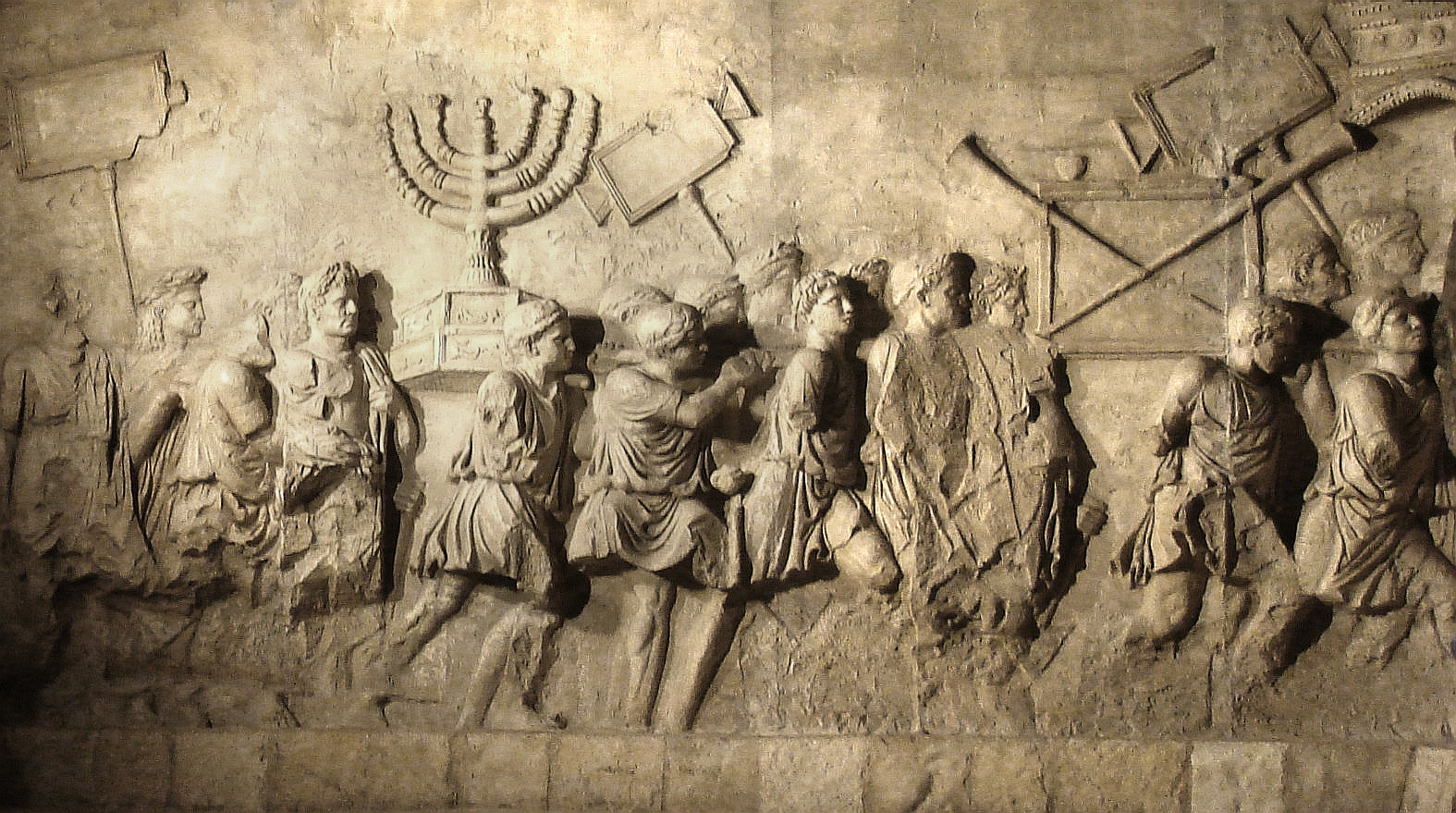
The cover illustration for “The Gospel According to the Romans” comes from the Arch of Titus in Rome. (Actually, it comes from a Tel Aviv museum’s reconstruction of that part of the Arch.)

The Arch of Titus commemorates the destruction of the Temple in Jerusalem and the looting of its treasures in 70 CE, during the Great Revolt that ended with Masada. This was 35-40 years after the death of Jesus, but part of the pattern of a major uprising against the Roman Occupation once a generation or so, and the Legions crushing it.

Treasures from the Temple in Jerusalem being looted by the Legio X Fretensis under Titus

The Roman attitude towards Palestine was that it was a strategically important province: not just at the crossroads of Mesopotamia and Egypt, not just part of the trade routes with India, but essential to prevent piracy and lawlessness in the eastern Mediterranean. So the Romans were there to stay. If the Jews were going to be quiet, the Empire would farm them for taxes while providing commerce and growth and infrastructure. If the Jews were going to be troublesome, the Legions would loot and pillage while suppressing uprisings. Standard Roman practice.

“The Gospel According to the Romans” puts Jesus into this context of Roman occupation and constant Jewish resistance. You’d be surprised how different that makes the Gospels look!

Contextualizing Jesus

Churches and Sunday Schools teach the Old Testament, the New Testament, the description of the Temple, the differences between Sadducees and Pharisees, food, clothing, etc. But no mention of the Romans.

Jesus opposed those who didn't follow the Jewish Law, and the Romans executed him

High school Ancient History teaches the rise of the Roman Empire and its acquisition of all the provinces around the Mediterranean. But no mention of Jesus.

This is like telling the story of Osama Bin Laden without mentioning the Americans – and then telling the story of the Western occupation of Iraq and Afghanistan without mentioning Islam or religious insurgents!

Historians are apparently scared of dealing with historical realities that bear upon the creation of religions; the talking snakes and virgin births and going up to heaven in chariots don’t mesh coherently with the sociopolitical narrative, so historians ignore them.

And priests and theologians are equally scared of contextualizing their stories, because the stories only make sense if they exist as detached fairytale bubbles. Their stories are self-referential, detached from reality, about a preliterate world where gods and angels walk the earth and perform magic, where demons are the cause of illness or misfortune, and where life will somehow continue after the body wears out and dies.

But Jesus was a person in a particular time and place. He was a religious Jew, an acknowledged rabbi, living under the military occupation of an idolatrous, pig-eating Western superpower – the Roman Empire. The Romans had been controlling, taxing (and sometimes looting) Palestine for a hundred years, in the face of major uprisings once a generation. When you view the words and actions of Jesus in this light, a fresh and powerful picture appears, clearly hostile to the Romans.

THE GOSPEL ACCORDING TO THE ROMANS explores the life of Jesus within this historical context.