The Four Philosophies

Judaism in the time of Jesus was monotheistic, but not monolithic. Josephus famously divided Jewish thought in four: Sadducees, Pharisees, Essenes and “the fourth philosophy”. They all awaited the Messiah, or Anointed One, a leader anointed by God who would reunite the Jewish tribes and, perhaps, rule them as King of Israel directly descended from David. How the Messiah would appear – born as a child, or descending from Heaven – was not certain. (But he would be a man, not a God or some Son of God.)
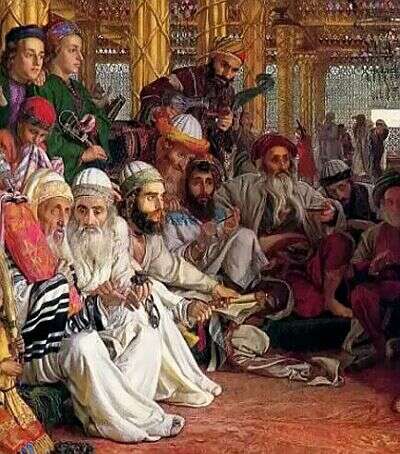
Sadducees - the pro-Roman philosophy under the Occupation

The Sadducees did not believe in a resurrection. With no real sense of an afterlife, let alone a Day of Judgment, they were inclined toward what was presently available. They were comfortable working with (or for) the Romans, and therefore were the religious and political ruling class among Jews.

The Pharisees believed that, God being just, all people would have to be resurrected so that they could be appropriately rewarded. This sentiment was more attractive to the lower classes than to the rulers, and the Pharisees were stricter than the Sadducees about social justice, adherence to the Law and not collaborating with the Romans.

The Essenes sought purity by withdrawing from everything to do with the Roman occupation – they didn’t like the idolatrous coins, let alone having to pay taxes, so they lived in isolated communities away from the cities.

And the Fourth Philosophy was that of the military resistance to the occupation: the Zealots. Heroes and patriots, or robbers and murderers, depending on your point of view, they led province-wide insurrections about once a generation for a period of 200 years – from the time the Romans occupied Palestine, until the Romans finally massacred, enslaved and deported almost the entire Jewish population.
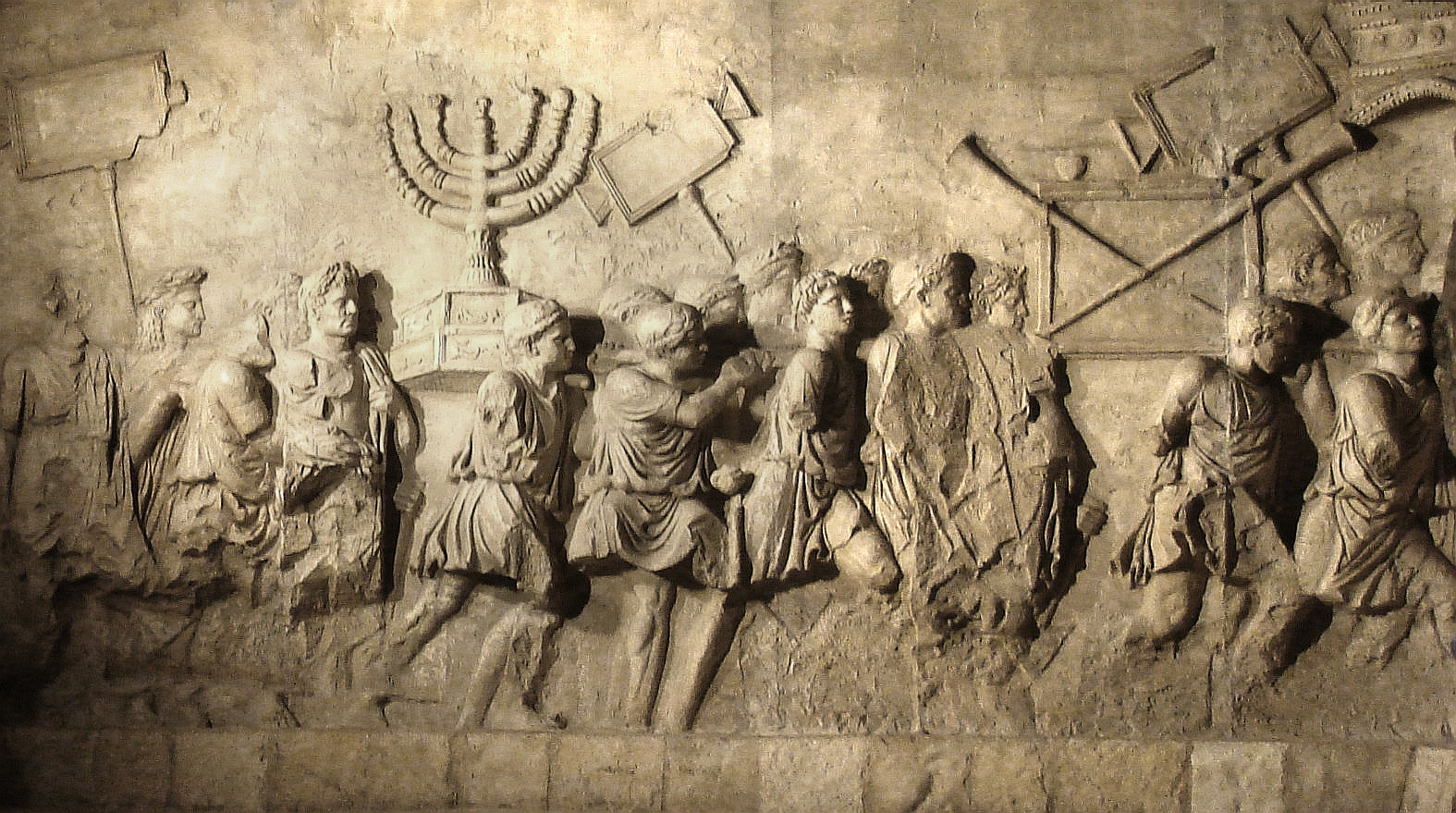

Why a Menorah?

The cover illustration for “The Gospel According to the Romans” comes from the Arch of Titus in Rome. (Actually, it comes from a Tel Aviv museum’s reconstruction of that part of the Arch.)

The Arch of Titus commemorates the destruction of the Temple in Jerusalem and the looting of its treasures in 70 CE, during the Great Revolt that ended with Masada. This was 35-40 years after the death of Jesus, but part of the pattern of a major uprising against the Roman Occupation once a generation or so, and the Legions crushing it.

Treasures from the Temple in Jerusalem being looted by the Legio X Fretensis under Titus

The Roman attitude towards Palestine was that it was a strategically important province: not just at the crossroads of Mesopotamia and Egypt, not just part of the trade routes with India, but essential to prevent piracy and lawlessness in the eastern Mediterranean. So the Romans were there to stay. If the Jews were going to be quiet, the Empire would farm them for taxes while providing commerce and growth and infrastructure. If the Jews were going to be troublesome, the Legions would loot and pillage while suppressing uprisings. Standard Roman practice.

“The Gospel According to the Romans” puts Jesus into this context of Roman occupation and constant Jewish resistance. You’d be surprised how different that makes the Gospels look!

Contextualizing Jesus

Churches and Sunday Schools teach the Old Testament, the New Testament, the description of the Temple, the differences between Sadducees and Pharisees, food, clothing, etc. But no mention of the Romans.

Jesus opposed those who didn't follow the Jewish Law, and the Romans executed him

High school Ancient History teaches the rise of the Roman Empire and its acquisition of all the provinces around the Mediterranean. But no mention of Jesus.

This is like telling the story of Osama Bin Laden without mentioning the Americans – and then telling the story of the Western occupation of Iraq and Afghanistan without mentioning Islam or religious insurgents!

Historians are apparently scared of dealing with historical realities that bear upon the creation of religions; the talking snakes and virgin births and going up to heaven in chariots don’t mesh coherently with the sociopolitical narrative, so historians ignore them.

And priests and theologians are equally scared of contextualizing their stories, because the stories only make sense if they exist as detached fairytale bubbles. Their stories are self-referential, detached from reality, about a preliterate world where gods and angels walk the earth and perform magic, where demons are the cause of illness or misfortune, and where life will somehow continue after the body wears out and dies.

But Jesus was a person in a particular time and place. He was a religious Jew, an acknowledged rabbi, living under the military occupation of an idolatrous, pig-eating Western superpower – the Roman Empire. The Romans had been controlling, taxing (and sometimes looting) Palestine for a hundred years, in the face of major uprisings once a generation. When you view the words and actions of Jesus in this light, a fresh and powerful picture appears, clearly hostile to the Romans.

THE GOSPEL ACCORDING TO THE ROMANS explores the life of Jesus within this historical context.