Deuteronomy 20: 16-18

You’ve no autonomy
under Deuteronomy;
it’s your obligation
to your tribal nation
to kill all Palestinians
so you don’t sin against
God, who’s neurotic.
Yes, Yahweh’s psychotic.
No escaping his wrath,
no path but the psychopath.

*****

For Christians and Jews who state (as Jesus did) that every reported command by God in the Torah / Old Testament must be obeyed, I ask their position on Deuteronomy 20. This contains the command for the complete genocide of the non-Jews living in the land which Moses claimed had been given to the Jews by God. (Note: not expulsion or enslavement of the people living there, but the death of all of them and their animals.) The reason? So that they don’t teach evil ways to the Jews:

16 But of the cities of these people, which the Lord thy God doth give thee for an inheritance, thou shalt save alive nothing that breatheth:
17 But thou shalt utterly destroy them; namely, the Hittites, and the Amorites, the Canaanites, and the Perizzites, the Hivites, and the Jebusites; as the Lord thy God hath commanded thee:
18 That they teach you not to do after all their abominations, which they have done unto their gods; so should ye sin against the Lord your God.

To the extent that fundamentalist Jews constitute a large percentage of the Israeli population and are influential in the national government, the Palestinian situation cannot be resolved until scriptural passages like this are dragged out into the open and examined and discussed: was that passage only for then, and things are different now? Or does the command to massacre non-Jews still hold for today’s Jews in “the Holy Land”?

This poem was first published in The HyperTexts, where Michael R. Burch maintains extensive collections of poetry related to both the Holocaust and the Nakba, the Palestinian situation.

Illustration: “Moses has the mature women and the male children of the Midianites killed” is marked with Public Domain Mark 1.0.
Michael R. Burch, ‘Suffer the Little Children’

for the children of Gaza

I saw the carnage . . . saw girl’s dreaming heads
blown to red atoms, and their dreams with them . . .

saw babies liquefied in burning beds
as, horrified, I heard their murderers’ phlegm . . .

I saw my mother stitch my shroud’s black hem,
for in that moment I was once of them . . .

I saw our Father’s eyes grow hard and bleak
to see his roses severed at the stem.

How could I fail to speak?

*****

Michael R. Burch writes: “Three decades ago, I began working with Jewish Holocaust survivors and other Jewish poets to publish translations of previously unpublished poems written in Polish and Yiddish by victims of the Holocaust. Some were written by children. In some cases the poems survived but the names of the poets did not. I considered it a sacred task and believed we were saying “Never again!” to any and all Holocausts. But in my discussions with my Jewish friends, it became apparent that “Never again!” did not apply to the Palestinians. When I asked questions about Israel’s brutal abuses of Palestinians and the theft of their land – armed robbery – my Jewish friends became defensive and told me, essentially, to shut up and never question Israel. Their sudden change in attitude convinced me that something was wrong, deeply wrong. I decided to research the subject independently, invested considerable time, and came to the conclusion that the Palestinian Nakba (“Catastrophe”) is a Holocaust sans ovens, a modern Trail of Tears. And while my country, the United States, has opposed other Holocausts, it is funding this one and supplies Israel with terrible weapons that are being used to mass murder children and their mothers, fathers and families. I will continue to say “Never again!” to any and all Holocausts and invite readers to join me and do what they can to end and prevent such atrocities.”

‘Suffer the Little Children’ has been published by Art in Society (Germany), Pick Me Up Poetry, Jadaliyya (Egypt), The HyperTexts andMESPI (Middle East Studies Pedagogy Institute). According to Google the poem now appears on 462 web pages.

Michael R. Burch is an American poet who lives in Nashville, Tennessee with his wife Beth, their son Jeremy, two outrageously spoiled puppies, and a talkative parakeet. Burch’s poems, translations, essays, articles, reviews, short stories, epigrams, quotes, puns, jokes and letters have appeared in hundreds of literary journals, newspapers and magazines. He is also the founder and editor-in-chief of The HyperTexts, a former columnist for the Nashville City Paper, and, according to Google’s rankings, a relevant online publisher of poems about the Holocaust, Hiroshima, the Trail of Tears and the Palestinian Nakba. Burch’s poetry has been taught in high schools and universities, translated into 19 languages, incorporated into three plays and two operas, set to music by 31 composers, and recited or otherwise employed in more than a hundred YouTube videos. To read the best poems of Mike Burch in his own opinion, with his comments, please click here: Michael R. Burch Best Poems.   

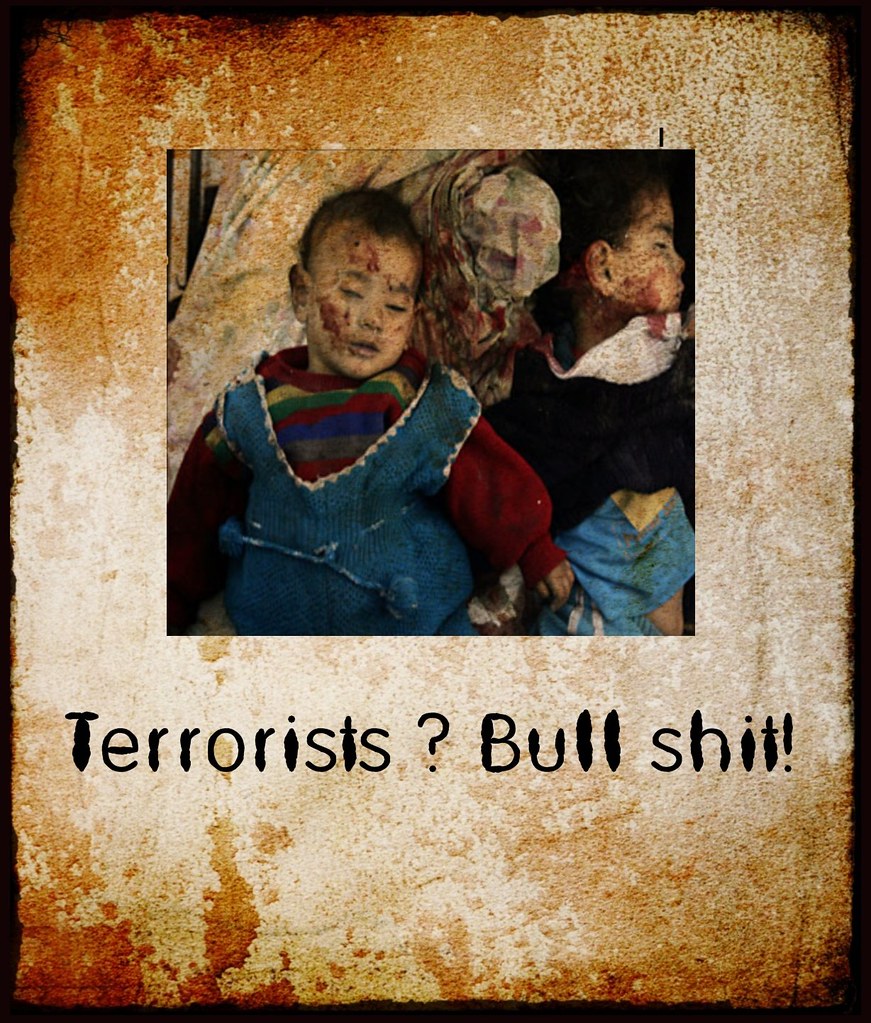
Photo: “Untermensch – Hannukah 2008 – Palestinian children killed by Israel in Gaza” by smallislander is licensed under CC BY-NC-SA 2.0.

Reactivating the blog

Most of my writing since I finished ‘The Gospel According to the Romans’ has been poetry, some of which has spilled through into this blog. My intent now is to return to the novel and post it here, chapter by chapter. I also hope to review the themes in it as they were developed, as a sort of study guide.

Because the book has a serious purpose: by contextualizing the story of Jesus within the sociopolitical realities of the Roman Empire and its occupation of Palestine, to take all the miracles, magic and mysticism out of the life of the man. Pretty clearly he was a Jewish fundamentalist with a Messianic dream, who failed in his attempt to capture and cleanse the Temple of foreigners and other impurities.

The book follows the structure of the synoptic gospels – Matthew, Mark and Luke, which tell essentially the same story – but from the point of view of the Roman tax agent “Saint” Matthew Levi who was recruited by Jesus but, in this novel, remains loyal to Rome… allowing us to see everything from opposing points of view.

Executing Jesus was OK; murdering civilians isn’t

When a military occupation by a Western power (the US, or the Romans) of a poorer country (modern Afghanistan, ancient Palestine) takes place, the occupying troops will kill people. Even after the situation settles down, there will be ongoing resistance.

Murdered child - killed in his sleep by Americans on Sunday.

Neither ancient Jews nor modern Afghans like being ordered around by large, well-fed, heavily-armored men who don’t speak their language, don’t adhere to their religion, don’t wear their clothing, and don’t respect their culture. A pig-eating, beard-shaving, uncircumcised military is an insult to them. Ongoing resistance is natural.

So when, every 20 or 30 years, there was a Zealot uprising in Galilee or Judea, or an attempt by Jesus to take control of the Temple in Jerusalem and have himself proclaimed King, they knew they were facing execution by the Romans if God failed to intervene actively on their behalf.

We may not condone Roman imperialism, which was mostly driven by trade – the need to suppress piracy in the Eastern Mediterranean, to connect Egypt to Syria, to build a reliable harbor at Caesarea Maritima, to protect the trade routes to India, to defend against the Persian Empire – but we can respect it. It tried to integrate all local gods into the Empire, it gradually extended Roman citizenship to local populations, and it brought peace and infrastructure development and an improved standard of living.

American imperialism appears to have less justification, and to be more based on pure exploitation. And when an Army sergeant (acting alone or not) goes on a killing rampage in the night and murders women and children in their sleep, he should not be protected by the occupying forces, but should be turned over to the local authorities for appropriate execution.

Best resources – Debunking myths

Humans have been very successful as a species through love of pattern-recognition activities and a broad search for cause-and-effect. This leads to a love of stories and constant search for ‘Meaning’. The easiest way to introduce a new concept to people is to connect it to a story, as Jesus did repeatedly through parables. The inherent danger is that, because people are programmed to seek a narrative, people prefer an incorrect model over an incomplete model. In the absence of a better explanation, they opt for the wrong explanation.

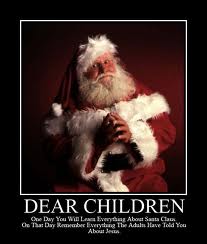
We all grow up at some point... if we live long enough...

So in the process of trying to debunk an incorrect idea, you have to be sure to provide a complete alternative explanation. You also have to be careful not to inadvertently reinforce the flawed idea – this ‘backfiring’ can be caused by various things: bad framing of the idea, or too many arguments and details, or threatening the listener’s worldview.

The Debunking Handbook, a guide to debunking misinformation, deals with these issues. It is now freely available to download, and offers practical guidelines on the most effective ways of reducing the influence of myths. The Debunking Handbook boils the concepts down into a short, simple summary, intended as a guide for communicators in all areas who encounter misinformation. It originated with climate researchers, but it has universal application.

I believe debunking myths of all kinds is important, because what we believe impacts how we make decisions. Bush foreign policy was informed with a lot of Messianic Christian mumbo-jumbo which contributed to the Iraq war as well as to anti-science policies on health care and stem-cell research. Science and government must be kept free of religion, or we end up with shorter and less fulfilling lives. But we can’t simply say ‘The Christian narrative is flawed; Jesus isn’t God, don’t be ridiculous.’ We have to provide a complete alternative story of who he was, and how we can understand his words and actions in a completely secular way.

That is what I have attempted in “The Gospel According to the Romans” – that Jesus was a Jew, and a fundamentalist Jew at that, who wanted to cleanse Israel by kicking the beardless, pig-eating, polytheist, idolatrous Romans out of Palestine and restoring the Torah as the source of law. He was connected to the Zealot uprisings which had been going on for 100 years before him and continued for another 100 years afterwards – his attempt to take over the Temple at Passover was a clear failure, and he was caught and crucified.

But this book is probably only half of what I need to say on the matter. Because Paul came along after Jesus and used him as the vehicle for creating the greatest syncretist religion the world has ever seen, blending Judaism and Mithraism with Egyptian and Greco-Roman practices to end up with the Christianity that we have today. In order to say that happened, and to be understood and believed, we need to tell it as a coherent and non-magical story – plausible even if we can’t know exactly what happened.

In short, we need a parable to debunk Jesus, Paul and Christianity.