Merry Christmas (and Hanukah, Kwanza, Divali, Yule, etc)
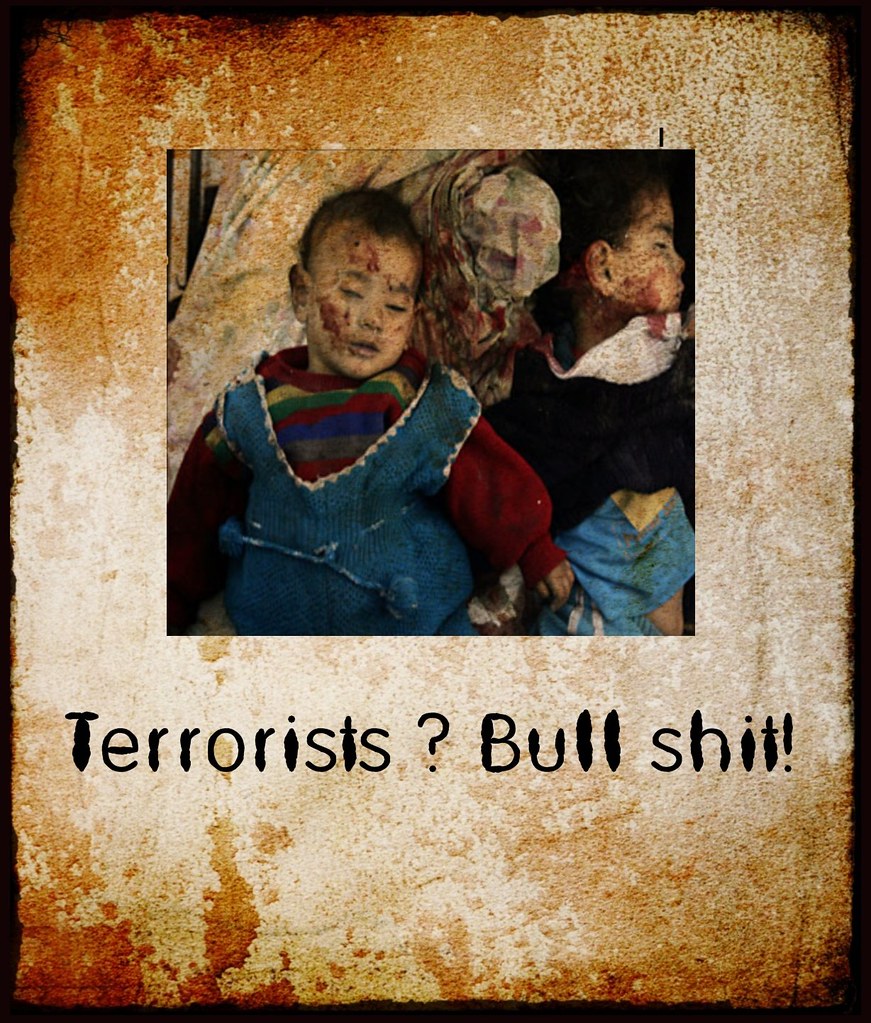
for the children of Gaza
I saw the carnage . . . saw girl’s dreaming heads
blown to red atoms, and their dreams with them . . .
saw babies liquefied in burning beds
as, horrified, I heard their murderers’ phlegm . . .
I saw my mother stitch my shroud’s black hem,
for in that moment I was once of them . . .
I saw our Father’s eyes grow hard and bleak
to see his roses severed at the stem.
How could I fail to speak?
*****
Michael R. Burch writes: “Three decades ago, I began working with Jewish Holocaust survivors and other Jewish poets to publish translations of previously unpublished poems written in Polish and Yiddish by victims of the Holocaust. Some were written by children. In some cases the poems survived but the names of the poets did not. I considered it a sacred task and believed we were saying “Never again!” to any and all Holocausts. But in my discussions with my Jewish friends, it became apparent that “Never again!” did not apply to the Palestinians. When I asked questions about Israel’s brutal abuses of Palestinians and the theft of their land – armed robbery – my Jewish friends became defensive and told me, essentially, to shut up and never question Israel. Their sudden change in attitude convinced me that something was wrong, deeply wrong. I decided to research the subject independently, invested considerable time, and came to the conclusion that the Palestinian Nakba (“Catastrophe”) is a Holocaust sans ovens, a modern Trail of Tears. And while my country, the United States, has opposed other Holocausts, it is funding this one and supplies Israel with terrible weapons that are being used to mass murder children and their mothers, fathers and families. I will continue to say “Never again!” to any and all Holocausts and invite readers to join me and do what they can to end and prevent such atrocities.”
‘Suffer the Little Children’ has been published by Art in Society (Germany), Pick Me Up Poetry, Jadaliyya (Egypt), The HyperTexts andMESPI (Middle East Studies Pedagogy Institute). According to Google the poem now appears on 462 web pages.
Michael R. Burch is an American poet who lives in Nashville, Tennessee with his wife Beth, their son Jeremy, two outrageously spoiled puppies, and a talkative parakeet. Burch’s poems, translations, essays, articles, reviews, short stories, epigrams, quotes, puns, jokes and letters have appeared in hundreds of literary journals, newspapers and magazines. He is also the founder and editor-in-chief of The HyperTexts, a former columnist for the Nashville City Paper, and, according to Google’s rankings, a relevant online publisher of poems about the Holocaust, Hiroshima, the Trail of Tears and the Palestinian Nakba. Burch’s poetry has been taught in high schools and universities, translated into 19 languages, incorporated into three plays and two operas, set to music by 31 composers, and recited or otherwise employed in more than a hundred YouTube videos. To read the best poems of Mike Burch in his own opinion, with his comments, please click here: Michael R. Burch Best Poems.
Photo: “Untermensch – Hannukah 2008 – Palestinian children killed by Israel in Gaza” by smallislander is licensed under CC BY-NC-SA 2.0.

American tourist smashes Israeli museum statue for being against the Torah. Demonstrating thousands of years of historical continuity. Quite impressive. Jesus would have approved.

Burqa Pride???
The Dutch have managed to create a political statement that is confusing everyone on both the right and the left. A Labour party councillor in Amsterdam dressed up in a yellow niqab for recent LGBTQ Pride celebrations, because the Dutch government has banned face-covering garments in government buildings and on public transport.
Burqas and niqabs are not required in the Quran, but they are symptomatic of the repressed role of women in old-fashioned versions of Islam (and Judaism, and Christianity). The freedom to do whatever you like because of your religious misapprehensions is a dangerous position to support; it leads to all kinds of antisocial behaviour, including genocide, female genital mutilation, and waving a live chicken over your head to cure disease.
But Jesus, being gay and an otherwise fundamentalist Jew, would probably have approved…
Michael Burch, a poet, creator of The HyperTexts and reformed fundamentalist Christian, has written the most detailed exposition I have ever seen on the issue of whether “hell” is a concept that should be accepted by Christians. The exposition has a mercifully short and clear introductory section that covers the key points – and then, for those who want to consider every possible aspect, continues at length.
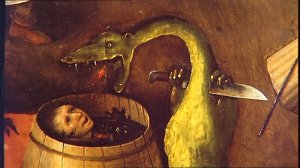
Hell, as imagined by Hieronymus Bosch
Personally, as a skeptic, I find the idea of hell simply ludicrous. As Omar Khayyam says scornfully to God (in FitzGerald’s translation):
Oh Thou, who didst with pitfall and with gin
Beset the Road I was to wander in,
Thou will not with Predestin’d Evil round
Enmesh me, and impute my Fall to Sin?
(“Gin” meaning “noose of hair or wire for snaring wild birds alive”… which might be the origin of the drink’s name, I suppose.)
Hell is hardly a logical product of an all-powerful Creator, unless that Creator is by nature a sadist. Rather the word that has been so often translated as “hell” is “sheol”, meaning “a grave” or “the place where all dead people go”… which is why, in Psalm 139:8, King David could say that if he made his bed in Sheol, God would be there with him.
Forget hell. It’s a stupid idea.
 Chapter 1 of “The Gospel According to the Romans” introduces key factors regarding the social structure and day-to-day environment of 1st century Palestine: Palestine was a province of the Roman Empire and, as such, was under the military occupation of a Roman Legion. The figurehead ruler might be a local king, but real power rested with the Roman governor.
Palestine was unique in the Empire in having only one local god, and this god was considered superior to all other gods, to the extent that Jews were not allowed to worship any but Yahweh. Normally the Romans just added the local gods to their own pantheon and expected the natives to allow the worship of Roman gods alongside their own. This was not acceptable to religious Jews.
So the local leaders had to choose between four approaches to the Romans: that of the Sadducees – active collaboration, favored by the wealthy, powerful and venal; of the Pharisees – resentful acquiescence while ignoring sacriligious Roman factors like pigs, shaved chins and graven images; of the Essenes – retreat from Roman influence into remote, self-sustaining and traditional communities; and of the “Fourth Philosophy”, the Zealots – armed resistance, assassination, robbery, and province-wide uprisings.
But not all Jews were religious. The novel’s protagonist, Matthew Levi, was born and raised in another province, Syria, and has long been friends with individual Romans. Chapter 1 sees him interviewed by the governor, Pontius Pilate, for a position as tax collector in Capernaum. As the Roman agent in a small town he will also be expected to send reports about any anti-Roman sentiment or activities he hears of. In effect, any tax collector will be a spy.
Most of my writing since I finished ‘The Gospel According to the Romans’ has been poetry, some of which has spilled through into this blog. My intent now is to return to the novel and post it here, chapter by chapter. I also hope to review the themes in it as they were developed, as a sort of study guide.

Because the book has a serious purpose: by contextualizing the story of Jesus within the sociopolitical realities of the Roman Empire and its occupation of Palestine, to take all the miracles, magic and mysticism out of the life of the man. Pretty clearly he was a Jewish fundamentalist with a Messianic dream, who failed in his attempt to capture and cleanse the Temple of foreigners and other impurities.
The book follows the structure of the synoptic gospels – Matthew, Mark and Luke, which tell essentially the same story – but from the point of view of the Roman tax agent “Saint” Matthew Levi who was recruited by Jesus but, in this novel, remains loyal to Rome… allowing us to see everything from opposing points of view.
Into the land for which the Jews
A thousand years before
Had killed and burned to take,
Jesus was born.
In towns controlled by Rome –
Grafting their multicultural odd gods
Onto Rome-cleansed, Rome–straightened cities –
Jesus played.
Walking four miles from Nazareth
To Sepphoris with Joseph at age ten
To work and help his father build another
Roman Jewish palace,
Jesus toiled.
In the uprisings led by Judas of Galilee
When Joseph and two thousand Jews were killed,
Crucified by the Romans, Sepphoris burned,
Jesus escaped.
In hills and deserts outside Rome’s control,
Studying prophecies and hefting swords,
Jesus preached Israel purged of Rome.
Outside the shining city on the hill,
The Passover uprising crushed by Rome,
Flanked by two Zealots, heads of the revolt,
Jesus, King of Jews, was crucified.
Preventing further fundamentalists
Leading attacks against High Priest and Rome,
Saul hunted Jesus’ Messianic dregs.
Seeing an opportune new power base,
Mixing old Jewish myths in a fresh blend
With Mithras, Isis – a One God for all –
Saul/Paul created Christ as a new God.
Both fundamentalist and Paulist Jews
Denying the Emperor’s divinity –
Disrupting commerce, peace and government –
Nero burned Jewish Christians, and
Titus destroyed the Jewish Temple, and
Hadrian deported all the Jews
From Palestine, scattering Christians and Jews
Throughout the Roman Empire and beyond.
Jews kept their heads down. Christians evangelized,
Spread through the powerless – slaves, women, poor,
Criminals and the lowest army ranks.
Seeing an opportune new power base,
Constantine changed Rome’s faith.
Controlling now (in part) the Emperor,
Popes ruled the West from Rome, built palaces,
And persecuted Jews.
(Jesus gives no opinion, being dead.)
Published: Ambit 211, UK, January 2013
Judaism
Genocide in Canaan
Gave God’s land to the Jews;
But genocides in other lands
Are Yahweh’s big taboos.
Buddhism
All life is suffering,
Yes, all our life is pain;
Then I must be a masochist –
I’d love to live again.
Norse religion
The first gods killed a giant,
From his skull to make
The sky, and mountains from his bones –
What lies! No talking snake?!
Christianity
Jesus wasn’t Jewish
And his killers weren’t from Caesar;
At least, so Paul said after
An epileptic seizure.
Islam
There is no God but One,
Perfect in every way;
All creatures do His unknown will –
So there’s no need to pray.
Mormonism
To teenage Joseph Smith
An angel showed gold plates
On which he read ‘Jesus Was Here’ –
It got him lots of dates.
Modern Paganism
Pretentious modern pagans
Without a sense of spoof
Have got no clue what Stonehenge was
When it had walls and roof.
Atheism
I don’t see gods on clouds,
I don’t hear angels sing;
There’s just one question bothers me –
How come there’s anything?
(Published online in Snakeskin, August 2016)
Genetically, many more humans are right handed than left handed. When everything needs to be done the same way, therefore, there is a natural tendency to require that the procedure favor the right handed.
For example the Roman army required all foot soldiers to hold the shield with the same hand, for the sake of tight formations such as the Tortoise or the Shield.

The Shield formation was designed to be impenetrable by cavalry – at least from the front…
Formal Roman meals were taken reclining on one elbow. You reclined to the left, and ate with the right hand. Jews also celebrated feasts including Passover this way (as in the Last Supper, despite later European depictions). In Judaism left handedness is accepted, but only as an unfortunate imperfection along with blindness, lameness or a lisp. Any of those imperfections disqualified a priest from serving in the Temple in Jerusalem.
In the Arab world today there is still a heavy emphasis on right handedness. People often pick food from a common dish at mealtimes, and the right hand is the “clean” hand for shaking hands, for writing, and for eating with. The left hand is used for wiping yourself at the toilet. Imagine the personal embarrassment and the social stigma of the thief who has had a hand cut off, and must do everything with the same hand, and dip into the common pot with his “dirty” hand…
The left hand ends up with all kinds of negative connotations, now built directly into many languages. And so the final word has to go to the trilingual quip by Canadian socialist Tommy Douglas: “The left in Canada is more gauche than sinister.”
 The Gospel According to the Romans