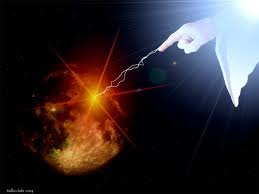
The Miracles, 3 – Walking on the Water

Here’s the story (Matthew 14: 22-33): the fishermen are headed for home at the end of the night, and it’s stormy, and they can’t see where they’re going. Jesus comes walking out to them on the water – Peter jumps over the side to be with him, starts to sink, and Jesus pulls him up.
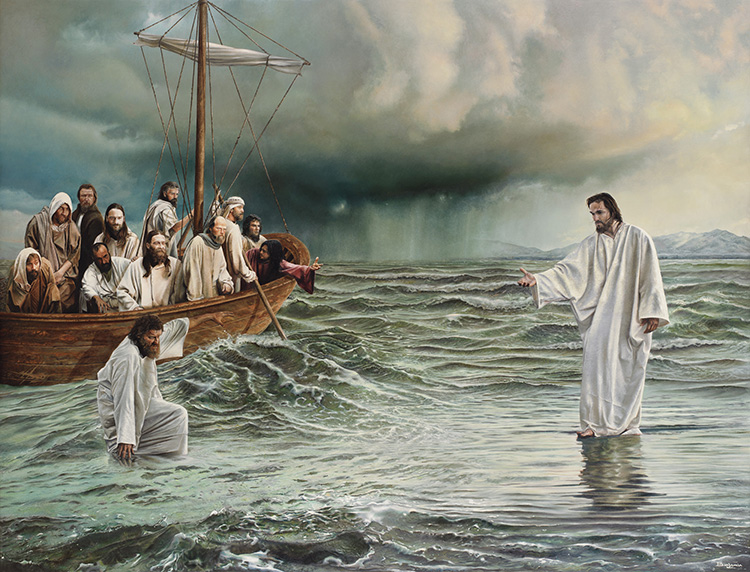
Jesus walking on the water, the impetuous Peter failing again

The text gives the impression that they were well out from shore, maybe a mile, who knows. But there’s no real context for the story, as usual – no perspective, and no resolution.

The question is always whether we can find an explanation that allows for basic truth in the story (even if it’s been hyped and spun a little, or misremembered or misunderstood) without contradicting the known laws of the universe.

Consider: did Peter now walk the mile back to shore with Jesus? Or did Jesus carry him? Or did one or both get back in the boat, and they sailed in? None of these are mentioned… because none of these needed to happen.

The “sea” in the story is the Sea of Galilee, a lake 10 miles wide. Capernaum, where the fishermen lived, is naturally on this lake. The lakeshore there is low and gently sloping, part beach and part marsh. The beach is mostly rock, some sand, the water is shallow for a fair distance. Let’s assume that then, as now, people protected their boats from storms coming up the lake by building a ‘mole’, a wall of loose rocks not necessarily higher than the lake level, out into the lake.

It’s still dark, the boat’s coming in to shore in a storm, the fishermen can’t see where the beach is, let alone the mole. Jesus comes walking out on the mole to help. Peter jumps over the side of the boat onto the mole, but then loses his footing and falls in (the water may only have been a couple of feet deep), and Jesus helps him up. Then they help guide the boat to the beach, and drag it up.

Years later, when young followers who never met Jesus are asking Peter for stories about what it was like working with him, they get told a slightly exaggerated version. They get, naturally, a fisherman’s story.
What’s this blog all about, anyway?

This blog is a marmalade – sweet and sour boiled together, both rind and juicy bits.

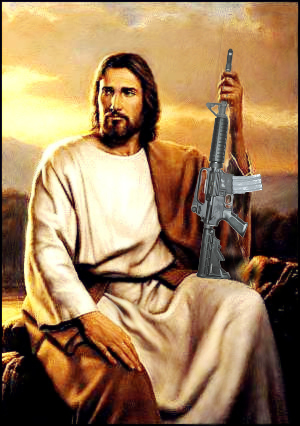
Jesus was not a pacifist.

  • It’s a blog for the ideas of my novel. The novel looks at Jesus in the context of the constant uprisings against the Roman Occupation that began 100 years before his preaching, and went on for 100 years afterwards… until the Romans finally leveled Jerusalem, and killed or enslaved and deported all the Jews, and banned them from the replacement city of Aelia Capitolina.
  • It lets you read Jesus’ words and actions with the awareness that his “greatest commandment” is to recite the Shema, the fundamental Jewish prayer (“Hear, O Israel,”) – and practicing Jews do it multiple times a day. It’s Judaism 101. Jesus wanted Israel to turn back to the Covenant with God, and get rid of the idolatrous, beard-shaving, pig-eating Westerners who were marching around the country without bothering to learn the language.
  • Yes, it makes comparisons with modern Western invasions and occupations.
  • So it carries all my grudges against the Bush/Cheney/Rumsfeld/Wolfowitz/Blair destruction of Iraq in the hope of oil money and imperial glory. 100 million of us around the world had protested and pointed out that it was going to lead to nothing but death, destruction and economic catastrophe at home and abroad. And here we are.
  • It also carries the ironies of the current Westernized Israeli occupation of Palestine, and the cynical and heavy-handed Israeli destruction of the people who have been indigenous there for the past 2,000 years… a repetition of how the Jews slaughtered all the Canaanites and others who had been living in the area before Moses came along.
  • So I think Moses was a genocidal barbarian (Deuteronomy 20: 16-18).
  • And Jesus was a Jew, and more in tune with Osama bin Laden than anyone else.
  • And St. Paul was an epileptic visionary who created Christianity out of a mishmash of Judaism, Mithraism, and bits of Egyptian and Roman mythologies and practices.
  • And I have no respect for any monotheist who believes the earth was created in the past 10,000 years, or thinks the tribal legends of illiterate herdsmen have relevance for government policy today.
  • Does anyone really believe the first chapter of Genesis, when it says that God created day and night on the first day… and then made the sun and moon on the fourth day? What I believe is that we live in a universe of a billion galaxies, each with a billion suns – and someone who can’t even figure out the relationship between daylight and sunshine is to be treated seriously?
  • As for what the creative force behind a billion galaxies looks like, who knows. Call it God if you want… but where did it come from? Why is there anything at all?
  • And I love polytheist mythologies, and they speak to the soul’s images and poetry and inner health – but they’re not literally true.
  • And I loathe people who use religion as nothing but a way to make money, or to grab power. And I loathe people who use politics in that way, too. So I doubly loathe hypocritical politicians who mouth religious crap.
  • But oh how I love it all, at the same time! What a planet! Unbelievable natural beauty and works of art, and the most appalling destruction and massacres, planet-wide pollution, and greed and ignorance. But what can you expect of a planet of 7 billion heavily-armed apes? Humans are simply mind-boggling, stumbling through the dark like reckless two-year-olds.

By the way, it’s also a blog for the novel itself. With links to the trade paperback and to the Kindle edition. But don’t expect to find all the blog’s ideas in the novel – it’s just a contrarian (realistic, commonsense) retelling of an old story from the point of view of, yes, the Western occupation. And yes, Jesus was crucified. No, he didn’t come back from the dead. So, do you want to see how he did all those miracles?

When monotheism goes really wrong

Who would have guessed that Jesus’ fundamentalist Judaism would be hijacked by Paul as pro-Roman, and end up anti-Jewish? And who would have thought that a message of poverty and trust in God would lead to Pope Leo X…

If Heaven was a thing that money could buy, the rich would all be there...

At age 38 Giovanni de’ Medici – sick, syphilitic, stinking from open ulcers, and having bribed the Vatican’s physicians to say he had less than a month to live – was elected Pope to give the Cardinals time to decide on a real successor to Julius II. But he recovered, and his first declaration as Pope Leo X was “God has given me the papacy, now let me enjoy it.”

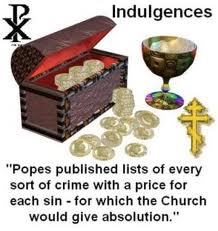
He turned the Vatican into a non-stop party of banquets and sex – his preferences were obscene plays, and sex with his chamberlains. To raise money, he created 1,353 new salable Vatican offices, licensed and taxed 6,800 prostitutes (for a city of 100,000 people), borrowed massively at 40% interest, and greatly extended the sale of indulgences (rich people buying forgiveness of sins so that they don’t have to spend time being cleansed in Purgatory before they can enter Heaven).

It was Leo who created one of the most famous and damaging quotes in Christian history. At a lavish Vatican banquet on Good Friday, 1514, in the company of Cardinals who recorded it, he raised a chalice of wine and toasted:

“How well we know what a profitable superstition this fable of Christ has been for us and our predecessors.”

All of this – the immorality, profligacy, and sale of indulgences – led directly to the Protestant revolt touched off by Martin Luther in October 1517.

But of course, the Roman Catholic church wouldn’t engage in anything so cynical nowadays, would it?

NOTE: The comments immediately below the clipping are NOT MINE, thank you!

Refs: http://www.bibliotecapleyades.net/vatican/esp_vatican30c.htm

http://www.nexusmagazine.com/articles/Papacy3.html

Encyclopaedia Britannica, 3rd ed., Edinburgh, 1788-97, vol. ix

and other references found within the above.

A short, simplistic history of monotheism

Three or four thousand years ago the Jews decided to only worship one god, Yahweh; and some time after that they decided that Yahweh was the only God.

Symbols of the three major monotheist religions

Two thousand years ago, under cultural pressure from Egyptian neighbors, Greek settlers and the Roman occupation, Jews were sliding in their beliefs. Jesus was one of many preachers who tried to restore the people to hardline Judaism through an emphasis on the Shema as the basic prayer: “Hear, O Israel…”

After the Romans crucified Jesus for his Messianic kingship claim, Paul came along. Paul was a Westernized Jew who wanted to spread a religion throughout the Roman Empire, and he decided to do it by blending Jewish monotheism with the polytheist rituals of Rome and Egypt and with the popular military sun-god cult of Mithras. He made Jesus into a Jewish Mithras, elevating him to a divine – or at least mythic – status, and downplaying Jesus’ physical nature.

Fourteen hundred years ago Muhammad, knowing a fair amount about some forms of Christianity as well as Judaism, preached a return to pure monotheism, and the worship of a God who is “One, and eternally sought, who neither gives birth nor is born, and there is none like Him.” Jesus is given recognition as a prophet, but fully human.

So Islam is very close to Judaism and the actual teachings of Jesus, while Paul’s “Christianity” is the odd one out. Think about it: God cannot be human; God can’t be pictured, and you shouldn’t even try; pray to God, not to any saint or any other human; oh, and don’t eat pork. Judaism and Islam agree on all those, and Christianity disagrees. That’s pretty fundamental. And clearly, Christianity isn’t really monotheism at all.

Unasked questions: Sunlight

Creates Light, and Day and Night, in Day 1... doesn't create Sun and Moon until Day 4.

How can I have been in and around the Bible for decades, and never noticed the totally bizarre concepts in the first chapter of Genesis?

I don’t mean the impossible ideas of later chapters – not the talking snake, not the angels having sex with “the daughters of men”, not the assumption that every animal species on earth lived within walking distance of Noah’s ark… those ideas may be unscientific, preliterate, and so on, but they’re not as mind-bogglingly irrational as this:

“And God said, Let there be light… and God divided the light from the darkness. And God called the light Day, and the darkness he called Night. And the evening and the morning were the first day.” Genesis 1: 3-5.

“And God said, Let there be lights in the firmament of the heaven to divide the day from the night… And God made two great lights; the greater light to rule the day, and the lesser light to rule the night: he made the stars also… And the evening and the morning were the fourth day.” Genesis 1: 14-19.

I’m still pondering this! Day 1: he makes Light, and Day and Night, and morning and evening. (Day 2, he makes heaven and sea and earth. Day 3, he makes grasses and fruit trees.) Then, on Day 4, he makes the sun, moon and stars…?!?

How could even an unscientific, preliterate, myth-creating narrator come up with something as nonsensical as that? (If Day and daylight are independent of the Sun, does the author of Genesis think that it is purely coincidental that daylight and the appearance of the Sun occur together?) Or how could even the worst story-reteller garble a narrative that badly in writing it down? And how the hell can ultra-Orthodox Jews and fundamentalist Christians believe that every word of the Bible as we have it today is literal fact?

(And how could I have created a skeptical protagonist like Matthew in ‘The Gospel According to the Romans’, and omitted to have him question Jesus on the believability of Genesis? No wonder there are no surviving dialogues of Jesus with Greek philosophers, they would have destroyed him! I may have to add a couple of sentences to the novel.)

Dissing various religions

Each of the major monotheistic religions appears to have had the intent of the founder overturned by his “followers”. Judaism began as a polytheistic religion, where Abraham allied himself with Yahweh against other gods like Baal, but it evolved into monotheism. Both Buddhism and Islam began with the founder attempting to prevent the worship of a human individual, but have ended with the founder himself being given quasi-divine status. Christianity began with Jesus preaching a rejection of the Roman occupation of Palestine and a restoration of Judaic monotheism, and developed into the rejection of Judaism and the embrace of Rome, and even the worship of Jesus as God.

Beware the wrath of god(s)/goddess(es)

More recent religions appear fraudulent from the beginning. Mormonism begins with a 14-year-old con artist writing a ludicrous (and completely impossible) account of the settling of North America by the Lost Tribes of Israel. Scientology was created by science fiction author L. Ron Hubbard some time after he wrote “If you want to make a little money, write a book. If you want to make a lot of money, create a religion.” Kwanzaa has been labeled “a hoax built around fake history and pseudohistorical delusions”, and its lack of historical roots lays it open to ridicule.

The polytheistic religions look cleaner: partly because their origins are lost in the mists of time, partly because their nature allows different worship for different gods and goddesses – whether Hinduism, Santeria, Roman cults or Norse paganism, you’re free to choose an appropriate deity for whatever you’re trying to get out of worshiping them. If you feel the need to discover or invent a new god, that’s not a problem in a polytheist tradition – and if it resonates with something deep in the human psyche it may well grow in popularity. If you want to do this, stay close to nature. Worship waterfalls and storms, for example, like these chimpanzees.

Best resources – Debunking myths

Humans have been very successful as a species through love of pattern-recognition activities and a broad search for cause-and-effect. This leads to a love of stories and constant search for ‘Meaning’. The easiest way to introduce a new concept to people is to connect it to a story, as Jesus did repeatedly through parables. The inherent danger is that, because people are programmed to seek a narrative, people prefer an incorrect model over an incomplete model. In the absence of a better explanation, they opt for the wrong explanation.

We all grow up at some point... if we live long enough...

So in the process of trying to debunk an incorrect idea, you have to be sure to provide a complete alternative explanation. You also have to be careful not to inadvertently reinforce the flawed idea – this ‘backfiring’ can be caused by various things: bad framing of the idea, or too many arguments and details, or threatening the listener’s worldview.

The Debunking Handbook, a guide to debunking misinformation, deals with these issues. It is now freely available to download, and offers practical guidelines on the most effective ways of reducing the influence of myths. The Debunking Handbook boils the concepts down into a short, simple summary, intended as a guide for communicators in all areas who encounter misinformation. It originated with climate researchers, but it has universal application.

I believe debunking myths of all kinds is important, because what we believe impacts how we make decisions. Bush foreign policy was informed with a lot of Messianic Christian mumbo-jumbo which contributed to the Iraq war as well as to anti-science policies on health care and stem-cell research. Science and government must be kept free of religion, or we end up with shorter and less fulfilling lives. But we can’t simply say ‘The Christian narrative is flawed; Jesus isn’t God, don’t be ridiculous.’ We have to provide a complete alternative story of who he was, and how we can understand his words and actions in a completely secular way.

That is what I have attempted in “The Gospel According to the Romans” – that Jesus was a Jew, and a fundamentalist Jew at that, who wanted to cleanse Israel by kicking the beardless, pig-eating, polytheist, idolatrous Romans out of Palestine and restoring the Torah as the source of law. He was connected to the Zealot uprisings which had been going on for 100 years before him and continued for another 100 years afterwards – his attempt to take over the Temple at Passover was a clear failure, and he was caught and crucified.

But this book is probably only half of what I need to say on the matter. Because Paul came along after Jesus and used him as the vehicle for creating the greatest syncretist religion the world has ever seen, blending Judaism and Mithraism with Egyptian and Greco-Roman practices to end up with the Christianity that we have today. In order to say that happened, and to be understood and believed, we need to tell it as a coherent and non-magical story – plausible even if we can’t know exactly what happened.

In short, we need a parable to debunk Jesus, Paul and Christianity.

Jesus and the Ultra-Orthodox Jew

In the news today, Israeli President Shimon Peres is calling on Israelis “to save the majority from the hands of a small minority”. Ultra-Orthodox Jews (who are exempt from military service and, rather than working, collect a government subsidy for religious studies) are increasingly resisting the secular nature of the Jewish state and trying to enforce ancient religious practices.

"Segregate women", the sign says. But surely the men are free to segregate themselves? At home? And veil themselves when they go out?

The Ultra-Orthodox demand strict gender segregation and “modest” dress for women. Recent incidents have seen schoolgirls harassed and spat at,  and women ordered to sit at the back of local buses or get off, despite court rulings that women can sit anywhere on a bus.

This issue resonates interestingly with the position of Muslim hardliners in other countries, and with the Jewish resistance to Roman rule 2,000 years ago.

Fanatics everywhere thrive on polarization. Ultra-Orthodox Jews and Al Qaeda are brothers with a common view of the universe, a view that their God, through His Infallible Book, has given them the divine duty to order the lives of entire 21st century nations in accordance with a subsistence-economy tribal past. They disagree as to which set of Semitic writings is the True Word of God, but they all loathe the Western tolerance of casual secular behavior. (Their leaders also understand that their power is increased by turning the Middle East into a religious battleground.)

When Rome ruled Palestine, the same dynamics were in play. Rome wanted a live-and-let-live religious environment where anyone could worship any god, and temples to all of them were scattered about. The more secular of the Jews were happy with this – they enjoyed the peace and improved travel and trade that the Empire brought. But the more religious of the Jews wanted to cleanse Israel of the beardless, pig-eating, polytheist idolators, and they wanted all Jews to repent and return to the Law of Moses. To them, all Jews were one family and everyone else should be evicted from the Promised Land.

Jesus was only one of a stream of would-be Messiahs who, over a 200 year period, led uprising after failed uprising against the Westerners and got crucified for their pains. Osama Bin Laden was of that mindset and he too has been executed. Secularism is gradually replacing religion around the world in a several-generations process now speeded by mass media, mass travel and the Internet. But the Ultra-Orthodox may well have a decade or two of success ahead of them.

The same things are still happening, that have been going on for 2,000 years. The Westernization of Israel is still in question.

Solstice, Stonehenge and Newgrange

The northern hemisphere’s winter solstice has been a major festival for the past several thousand years.

Newgrange at the winter solstice: the upper slot lets sunrise penetrate 60 feet into the mound.

At Newgrange in Ireland, 1,000 years before Stonehenge (and 500 years before the Pyramids of Egypt), a 60-foot passageway was built with walls and roof of stone slabs, ending in a cruciform chamber, and the whole roofed over with an enormous dirt mound 50 feet high and covering an acre of land. Normally the passageway and chamber are dark, but for a couple of days at solstice a slot over the entrance lets the rising sun flood the chamber with light for a few minutes. A lucky couple of dozen tourists, chosen by lottery during the year, are allowed in for this magical moment.

This suggests that the alignment of stones at Stonehenge was for the production of similar effects. The mound at Newgrange is still standing, but we don’t know what Stonehenge looked like. There may have been a mound at Stonehenge (there are other mounds nearby, notably Silbury Hill near Avebury), or else walls of wood and animal hides could have kept the interior dark except at the astronomically significant moments.

Thousands of years later, during the rise of the Roman Empire, the Roman year-end festival of Saturnalia began to merge with the northern neolithic ceremonies and their Celtic and Germanic descendants, and with the virgin birth at solstice of Mithras the Unconquerable Sun-god.

As early Christians looked for a way to separate Jesus from his Jewish roots and to make him broadly acceptable throughout the Roman Empire, his birth (which had probably happened in the spring) began to be celebrated at the winter solstice too.

Merry Christmas! Io Saturnalia! Happy Solstice! – In the northern hemisphere, this is the time to celebrate that the tide of darkness has turned, and that light and life are beginning to return to our world. Peace!

Unashamed commercialism…

Pantera, a Roman legionary, remains a plausible biological father for Jesus

You have only minutes left to get an interesting gift – a stocking-stuffer for an intelligent, literate, argumentative teen, say.

You could order them a copy of The Gospel According to the Romans for $14.95 here, or from Amazon.com

or you can send it to them as an e-book for 86p in the UK, or 99 cents in the US, or EUR 0,99 at one of Amazon’s main European websites (for example Germany, but you can substitute other country letters for the ‘de’), where you/they can also get a free Kindle app for reading it (look on the right-hand side)

or you can simply point them at this blog, http://robinhl.com, where they can enjoy random religious rants and sniping year-round!

(Discussion of Pantera is at https://robinhl.com/2011/11/06/jesus-son-of-pantera/, fyi. And Merry Christmas!)